
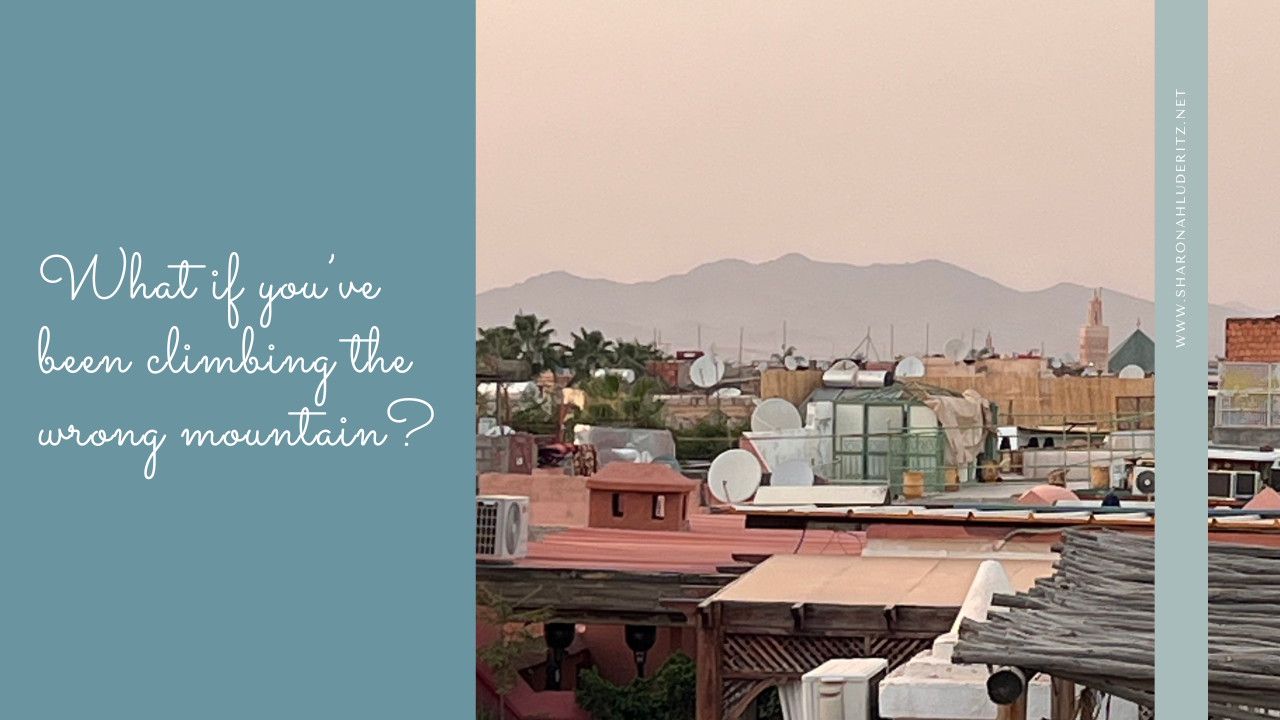
Around 50, the question is no longer whether you can keep going. It is whether the life you are committed to still feels like yours.
I woke up one morning around 50 and realised that my heart just wasn’t in it anymore. There wasn’t a dramatic event or one terrible thing I could point to. In many ways, my life still worked. But everything that had once meant so much to me had somehow lost its taste. It felt lukewarm at best, as if years of compromising had slowly diluted the essence of life until there wasn’t enough left to make me feel truly alive.
That is a painful thing to admit, particularly when you have spent decades building a life you thought you wanted. There is grief in recognising that you may have been functioning half-heartedly in parts of it for much longer than you realised. There can also be shame, because surely by this age we are supposed to have figured it out.
We don’t talk nearly enough about this particular stage of a woman’s life. We are taught to believe that once we have chosen the career, the relationship, the family, the home and the general direction of our lives, the difficult decisions are behind us. We have found our mountain, climbed it, and now we are supposed to enjoy the view.
But perhaps the old phrase about being “over the hill” at 50 contains a truth we have misunderstood. Maybe the significance of reaching the top is not that everything goes downhill from here. Maybe it is that, for the first time, you can see all the other mountains.
When the life that worked no longer feels alive
From the top of the hill, your perspective changes. You begin to see other ways you could live, work and spend your time. You notice desires you have pushed aside and parts of yourself that have been waiting quietly in the background. And sometimes you have the deeply uncomfortable realisation that you might have spent decades climbing the wrong fucking mountain.
That doesn’t mean the climb was wasted. Everything you have lived, built, learned, survived and created comes with you. Your lived experience is not something you throw away when you change direction. In many ways, it is exactly what makes the next chapter possible.
But before you rush off towards another peak, there may be a period when you simply need to stop. Rest. Give in to the desire to be alone. Let yourself grieve the identity that no longer fits and listen for what is underneath all the noise. There are some answers we can only hear when we stop asking everyone else what we should do.
Eventually, though, a question begins to form. Do I stay where I am because I have already invested so much in getting here? Or am I willing to go back down the mountain and climb towards something that feels more like mine?
This is where commitment becomes interesting. Not the kind of commitment that asks us to endure something simply because we once said yes to it, but the deeper commitment to stop abandoning ourselves through endless half-hearted yeses.
Where have you been saying yes when your heart was only half in it? Where have you stayed because something was sensible, familiar or comfortable? And what would change if the next chapter of your life required a wholehearted yes?
The right answer often begins with a better question
By 50, we have decades of lived experience behind us. We know more than we think we do. The problem is often not that there are no possibilities. It is that suddenly we can see several.
Perhaps you can imagine a different way of working. A different place to live. A creative project that keeps returning to you. A business you want to build. A contribution you want to make. A version of yourself that feels strangely familiar even though you have never lived as her before.
And then comes the question I hear so often from women at this threshold: how do I know whether this is actually my path?
I wouldn’t be living in Marrakech today if I had stayed where I was simply because it was familiar. I still don’t know exactly where this journey will take me, but I have made one commitment to myself: I want to enjoy my life fully. Getting here required me to go deep into myself, question things I had taken for granted and make choices that weren’t always easy. It has also been completely worth it.
This is the point at which I find Human Design incredibly useful, but perhaps not in the way people expect. I am not interested in using a chart to tell a woman what she should do. I want to hear her first. What feels too small now? What does she secretly want? What possibility keeps pulling at her? What is she frightened of committing to?
Only then do I overlay her Human Design and look at what emerges. Sometimes the most valuable thing the chart reveals is not an answer at all. It is the question she hasn’t thought to ask yet.
And this is why I don’t believe this work can simply be handed over to AI. AI is very good at answering the questions we give it. But what if those questions are still shaped by the life we already know? What if they are too sensible, too safe or too small?
No big vision will come out of small questions.
If you are standing on your mountain looking at the other peaks and wondering which one might actually be yours, perhaps you don’t need to know the entire route yet. You may simply need enough clarity to recognise what deserves your wholehearted yes.
With so much love & respect,
Sharonah x
